

Today’s video/podcast covers the 3rd of the Mental Frameworks—how perceptual limits set the dimensions for urban space.
Transcript:
Have you ever felt invisible as a pedestrian?
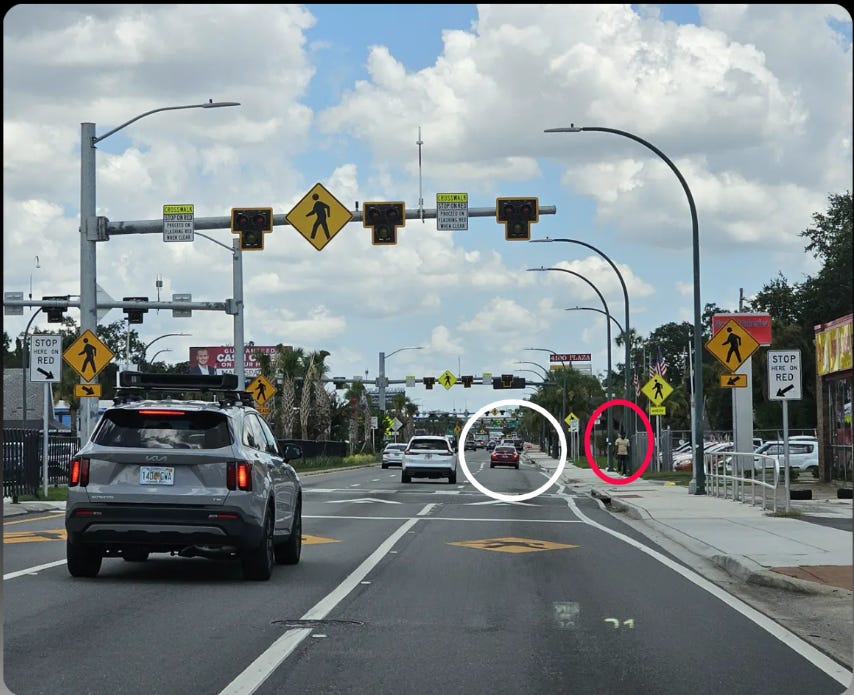
I started a study. We drove an area and we recorded that area, and then after we recorded the area and the different speeds, we tried to mark every single pedestrian that was there. There was one section of the drive that we looked through four times before we saw the pedestrians on the side of the road.
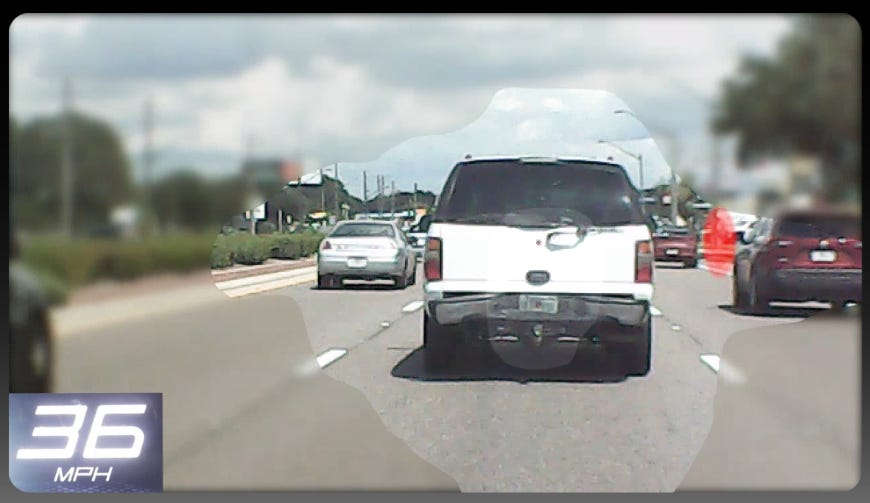
Why is that? What is it about the driving task that makes us so blind to the people around us? Do we stop being people when we’re driving? It has a lot to do with our ability to see and how far we’re capable of seeing other people, specifically other people’s faces.
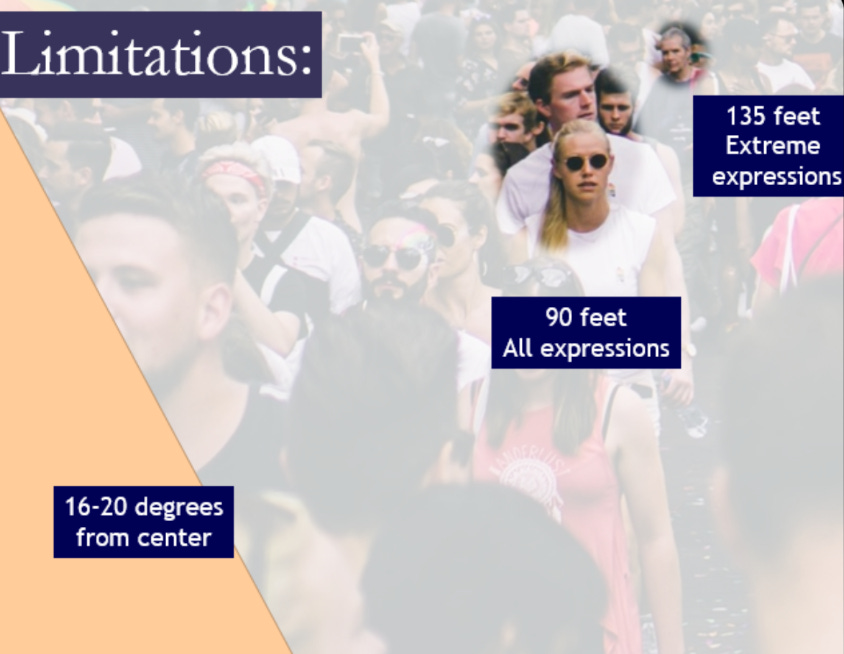
You can see most facial expressions, almost every single one of them, with great clarity out to about 90 feet. You can see extreme expressions out to about 135 feet.
Your eyes actually have a very small spot right in the middle that has super, super amazing resolution. That area right around your focal point can see the difference between a millimeter at 90 feet. And that’s the way your eyes have always worked. You don’t even see more than black and white outside of about 10 to 15 degrees, but you remember what those colors are, and so you imagine those colors. What you’re capable of seeing as a human being is very important in terms of the way you behave.
The things that you can readily see and recognize as threats or treats, those things get really high priority in your mind, and the fact that you can focus on them and see them very clearly, all the way out to 90 feet, it means that what’s within that 90 feet is really important to your brain.
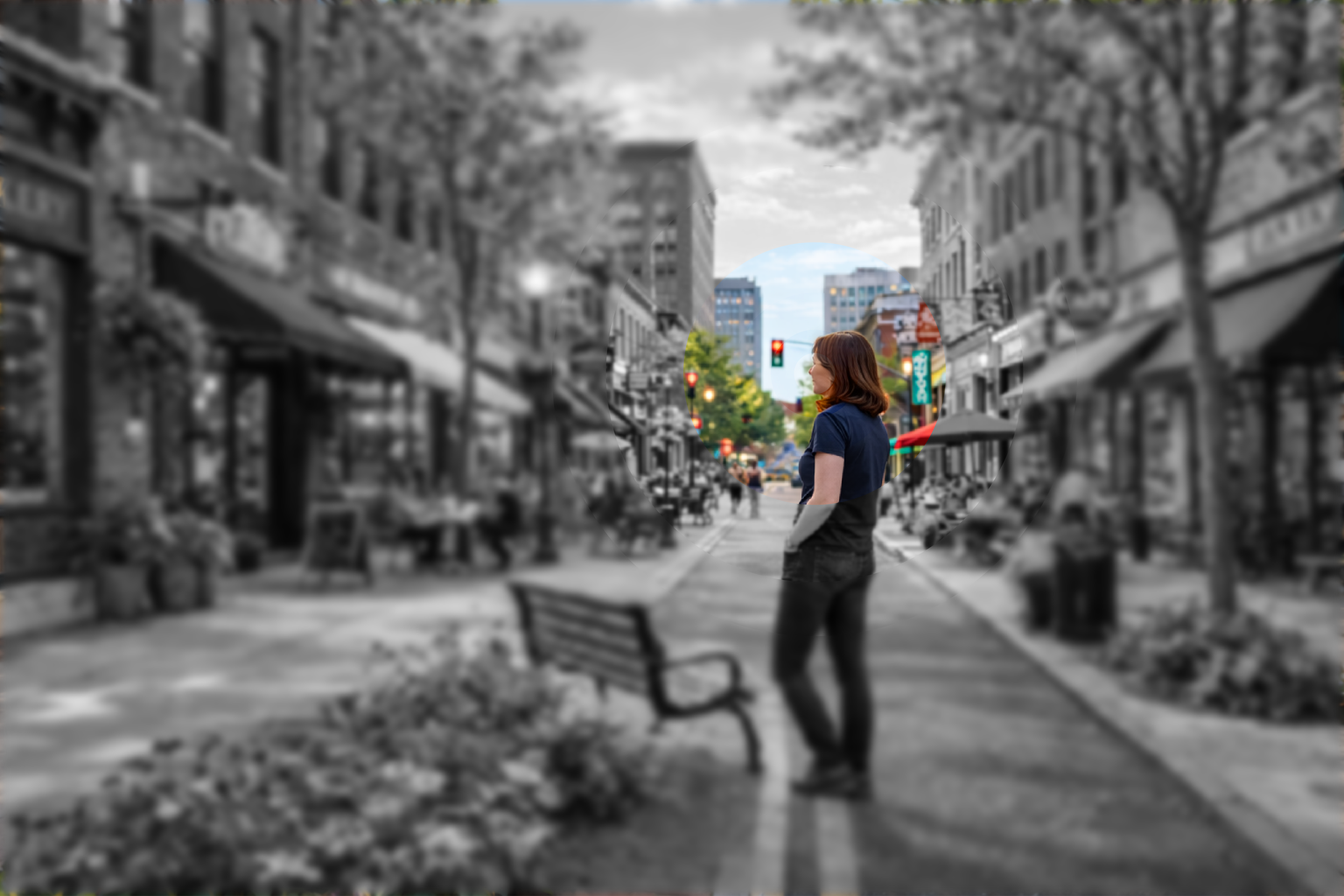
What’s outside of it loses its significance because the things that are outside of that distance are not likely to give you any kind of social feedback. They’re not likely to be close enough in proximity to physically hurt you, and they’re also not likely to be close enough to you to give you anything of real value.
You’ve lost all your social connection past that distance. You’ve lost all your physical threat past that distance, and you’ve lost all the benefits too. So let’s see what that looks like when we put it in a plan view.
So what can you see?
Now, here’s the thing. As a driver, I see directly in front of me. I can move my head a little bit, but I don’t know about you. As you get older, that doesn’t happen as much, and it turns out you really didn’t need to. Your eyes do an awful lot of that work on their own. But when you’re looking forward, your eyes really only work about 20 degrees from center. At 16 degrees you can’t tell the difference between a clock face and a human face. Which means as a driver, you quit looking any farther out than about 20 degrees.
Now, if you’re turning the corner, you know, if you’ve got things that you have to look at, you do that. For the most part, particularly when you’re driving down a straight section of roadway, you’re pretty much looking straight ahead and at a 20 degree angle around you.
When you throw that onto a planned view, that 20 degrees and the 90 feet that you can see basically everything. You get a corridor that’s about 60 feet wide.
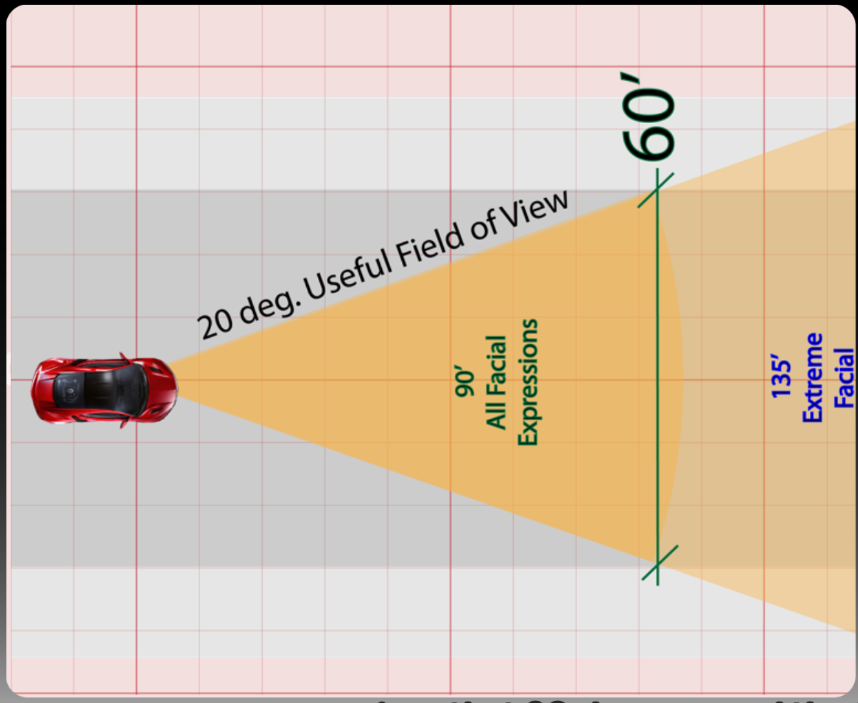
Now that number pops up in a lot of places around the world. In most of the oldest cities. In the oldest parts of the world, the busiest biggest road they have is often 60 feet wide from building face to building face. If there are parade routes, they get a little bigger, but for the most part, that 60 feet dimension pops up everywhere and it has a lot to do with your ability to feel comfortable in that space.
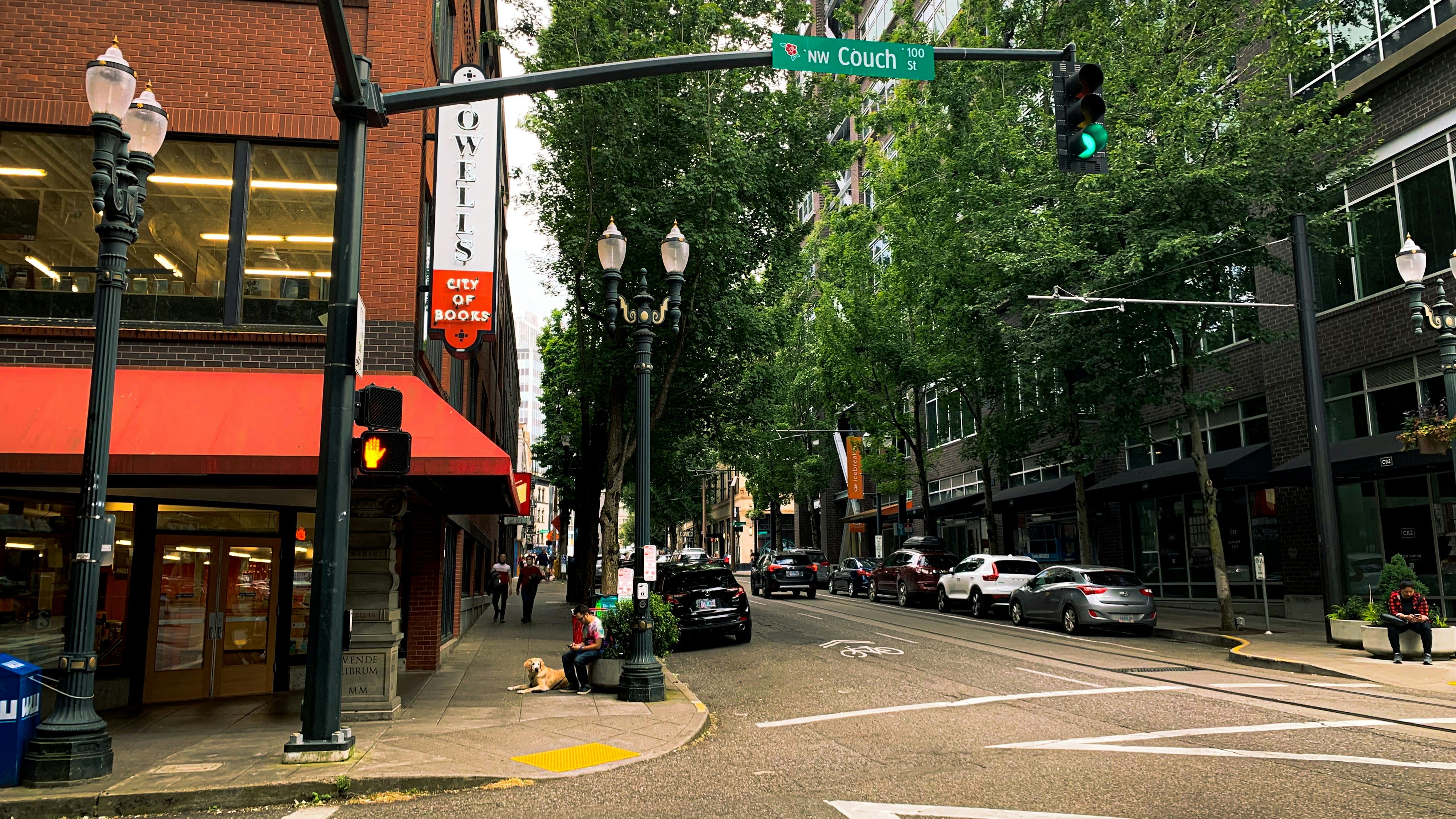
So if that area is only 60 feet wide and you’re walking down the center of it, you can unconsciously monitor everything that’s going on around you without having to actually lay your eyes on the things that are happening there. You know who’s there. You know what’s going on, and if there’s any threats or any friends treats, you know that you can see them out of the corner of your eye, and you don’t actually have to focus on them to pay attention to it.
The problem is when you get to corridors that are wider than that. You can’t do that unconsciously anymore. You have to actually turn your head and turn your eyes and scan to see all of the things around you. That means you’re keeping your head on a swivel and it’s a very uncomfortable feeling.
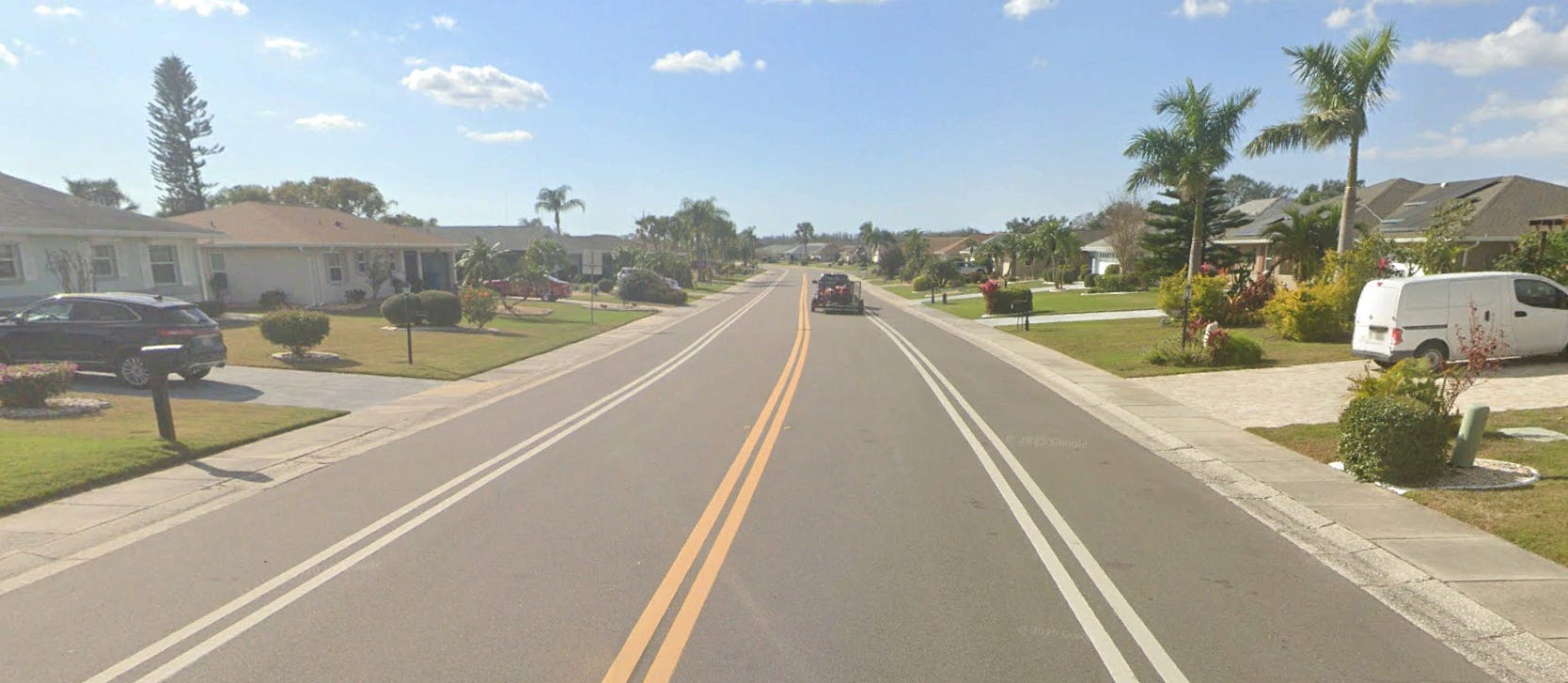
Architects will often talk about as space that is really large as feeling open and exposed. Now when you’re driving what you’re looking for, the targets that you’re trying to focus on are big rectangular boxes. And so they can be a long way away ‘cause they’re huge and you’ll still see them, they’ll still be within your 20 degree cone of vision. They’ll still be something that you can actually see because they’re large enough to pay attention to.
But people are very small in comparison to those big boxes. So you get into those big environments like I just showed you and people are dwarfed by that environment and you don’t pay attention to them.
This is the third of the mental frameworks. The first one was that nearly everything that you do is automatic. The second one is that people get priority. You’re gonna see people faster and easier than anything else if you’re capable of seeing them. And that’s the third one. Capability. Your perception has limits.
You can only see so much so far. If it’s a big thing, you can see it farther away. If it’s something like a human being that really matters to your brain, you need to be in a very compact, very contained, very enclosed space. Those spaces that feel like you’re moving through a room, not flying through a freeway.
Knowing this, how should we think about safety?
So if we want our pedestrians to be able to be seen, it happens automatically in those compact spaces, but there’s no guarantee you’re going to see them in those bigger spaces. That means that we’re gonna have to take care to make sure that people can see them. Or they’re not going to be in a place where a driver can hit them because he didn’t.
There’s a huge percentage of crashes that the driver never saw what was going on. Now is that because the driver wasn’t paying attention? Maybe. But to be honest, that’s probably only a very small percentage. The thing is, what they’re looking for is very small in comparison to what they’re normally focusing on, and so we are expecting people to see things that they’re really not capable of seeing. When you get into a four or a six lane highway or even a seven lane section. The chances of people seeing the pedestrians on the side of the road are really very small.
That’s a river, not a road. We would never have a canal or a river that we didn’t put a guardrail on, especially if we knew people were going to be walking next to it. You know, if it’s a section of canal that nobody ever walks on, that’s one thing, but if you’ve got a section of canal that’s got a pedestrian walkway or a pathway on it, no one would assume that that pedestrian doesn’t need a railing because if nothing else, there’s gonna be kids there. There’s gonna be people moving around there, and you would never want to have the risk of them falling in. How is a roadway any different? They’re not.

So if you’re in the process of designing or redesigning corridors. If you’re thinking about how those corridors work from a pedestrian or a bicycle standpoint, when it gets above about three lanes, you’re looking at a river, not a road, and you need a railing, especially if you’re gonna have people there regularly. In places where it’s really tight and contained and the environment is very narrow.
You don’t need as much because people are already focusing very close to themselves, and it’s much more likely that they can actually interact with the people around them face to face.
Up Next:
So next week we’re gonna talk about expectations. I mentioned expectations a couple of times, and it’s a really key part of driver psychology. What you see is not what’s visibly in front of you. You see what you expect to see, and if you don’t expect to see it, you’re probably gonna miss it
See ya next week (I hope!)
Programming notes:
If you are a regular follower, you’ll notice that it’s taken a few weeks to get back to this ongoing video/podcast series. I’m still working out the kinks on creating and editing video. As you can see, I tried Descript this week and it worked tolerably well—not perfect, but the audio comes out fine and it gives me the ability to show you pictures without too much trouble. So much in urban design and psychology has to do with what it looks like!! Let me know in the comments what you think about how it came out—and whether the way the video jumps sometimes from word to word drives you crazy.
If I can’t get the next Mental Framework in a video by next week, a friend of mine, Steven Florko, has come up with a very cool way of thinking about movement and place—and I’m itching to show it to you.


